Selecting the right coffee roaster size is one of the most crucial decisions for any roastery. It impacts not only your roasting capacity but also the time you’ll spend roasting, the efficiency of your workflow, and even your ability to manage the rest of your business. Here’s a guide to help you choose the perfect roaster size based on your business needs and goals.
1. Think About Roasting Frequency Over Quantity
Many roastery owners initially look at roasting capacity based on their projected coffee sales, but it’s important to consider how often you want to roast each week. Do you have time to roast every day? Or would you prefer to concentrate your roasting into a few days to leave room for other tasks?
For smaller roasteries with annual sales under £1.5 million, we recommend planning to roast around three days per week. This balance leaves one day for essential maintenance and a full equipment strip-down, helping ensure consistency in the quality of each roast.
2. Roasting Time and Business Operations
Time management is key. Roasting is labor-intensive, and while it’s rewarding, you don’t want to be tied to the roaster all day, every day. With a larger-capacity roaster, you can complete bigger batches in fewer hours, allowing you more time for marketing, client outreach, and other essential tasks that contribute to growth.
3. Match Roaster Size to Your Production Goals
Estimate your average weekly roasting needs based on current or projected demand and scale that against the roaster’s capacity. For example:
• Small roasters (e.g., 1-2 kg) are ideal for micro-roasteries, small cafés, or businesses focusing on small-batch specialty coffee.
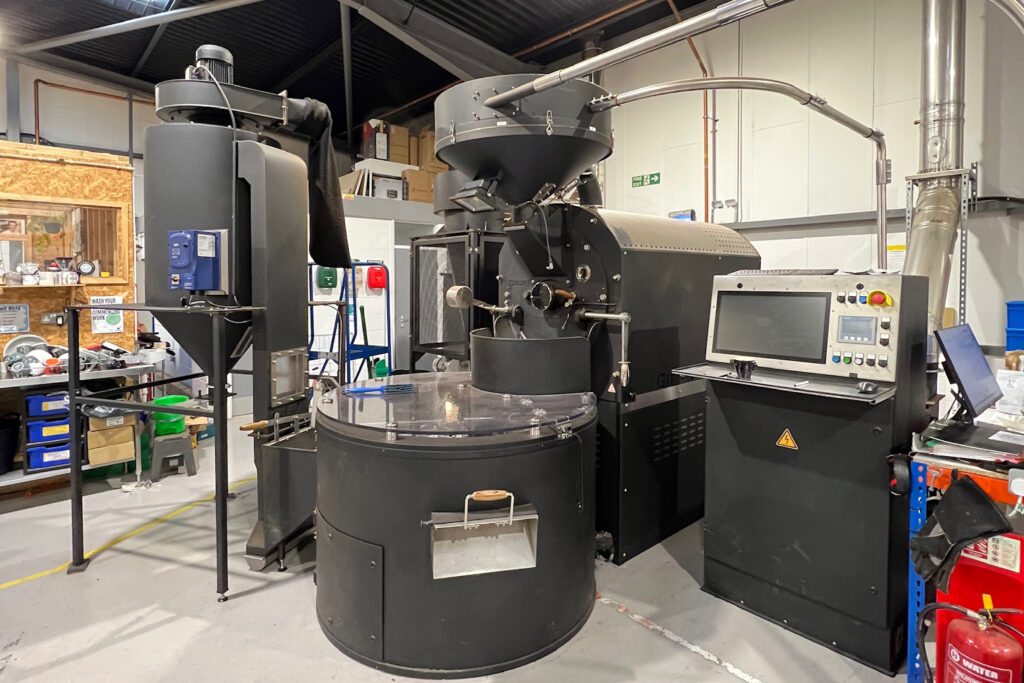
• Mid-sized roasters (e.g., 6-15 kg) provide flexibility for growing businesses, allowing you to handle larger batches as demand grows.
• Larger roasters (e.g., 45 kg+) are designed for high-volume production and best suited for established roasteries supplying wholesale clients or multiple locations.
4. Plan for Growth But Stay Realistic
While it’s wise to plan for growth, keep your current production needs in mind. Many roasteries start with a mid-sized roaster that provides room for moderate growth without excessive upfront costs or overwhelming operational requirements. If you grow faster than expected, you can always expand your roasting setup in the future.
5. Maintenance and Downtime Considerations
Regular maintenance is critical to a smooth operation. Scheduling one day per week for maintenance, cleaning, and inspection allows your equipment to operate efficiently, extends the life of your roaster, and helps prevent costly downtime.
Choosing the right coffee roaster size is about balancing your current needs with your long-term vision, as well as considering the time you can dedicate to roasting versus other parts of your business. By selecting the ideal size, you’ll set up your roastery for efficient, high-quality production and growth.
Ready to explore your options? Check out our Giesen Coffee Roaster Comparison to compare the full range of roaster sizes, or reach out to us with any questions. We’re here to help you make the best choice for your business.